The Leiden/ESA Astrophysics Program for Summer Students (LEAPS) 2026
STATUS
The application round is now closed.
Overview
LEAPS is an opportunity for students with an interest in astronomy and astrophysics
to perform a 10 week summer research project in collaboration with a research scientist
from Leiden Observatory or ESA/ESTEC. The program is open to all students not currently
engaged in a Ph.D. program (please see the full eligibility criteria)
We would like to use LEAPS as an opportunity to increase the diversity of researchers in Astronomy as we understand that successful science is supported by this.
Students are selected for the program based on their academic achievements
and research potential. Each applicant has the opportunity to choose up to two projects of interest,
and they are selected by project advisors based on what they
indicate their scientific interests and experience to be. Research at Leiden Observatory and ESA/ESTEC
takes place on a diverse array of topics (see below for LEAPS 2026 projects), and
student projects will likely consist of anything from the analysis of data from
world-class telescopes, to large computer simulations, to hands-on work in the astrochemistry laboratories.
Leiden Observatory
Leiden Observatory (located in the Gorlaeus Building, Einsteinweg 55, 2333 CC, Leiden) is a world-class institute for research in astronomy and astrophysics based in the Netherlands, approximately 35km from Amsterdam. The atmosphere at the observatory is dynamic, with approximately 100 faculty/research scientists and 70 graduate students engaged in astrophysical research on a wide range of topics. Major fields of interest include extrasolar planets, star formation, cosmology, galaxy formation, instrumentation, and astrochemistry. Multiple research projects will likely be available within these fields.
European Space Research and Technology Centre (ESTEC/ESA)
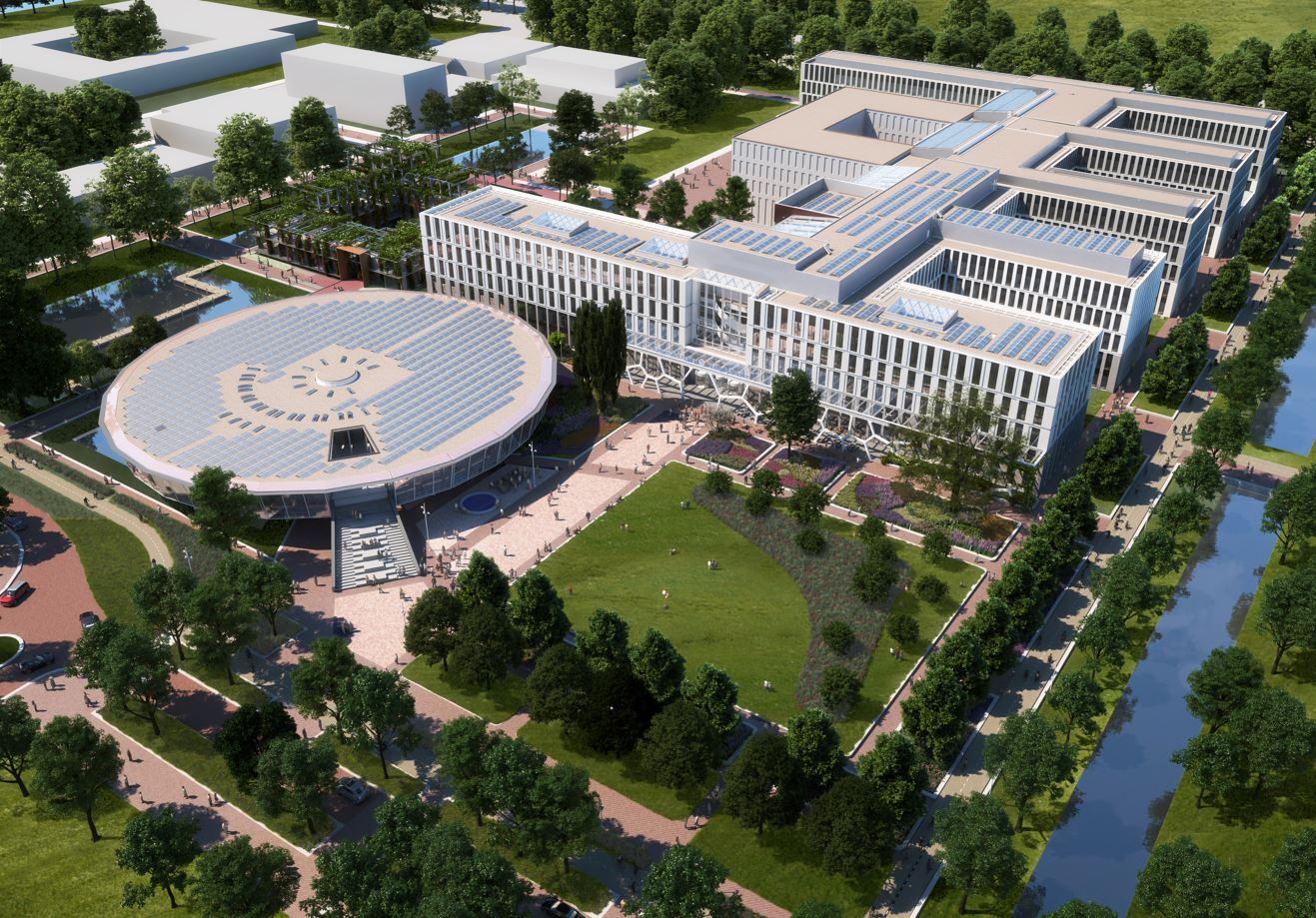
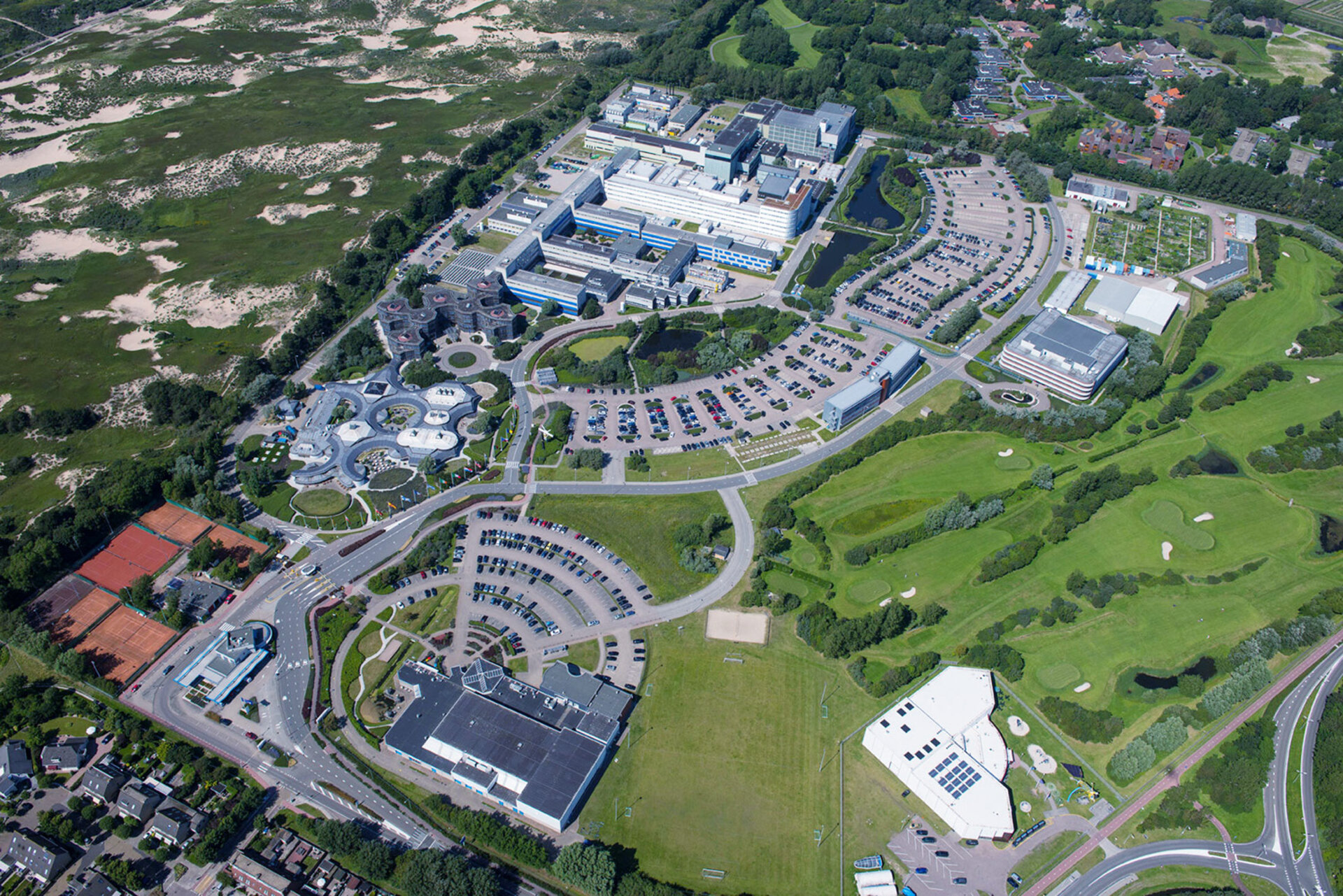
ESTEC is ESA’s largest establishment, and its technical and organisational hub. It is based at Keplerlaan 1, 2201AZ, Noordwijk, around 10 km from Leiden Central Station. ESA develops and manages many types of space missions,
from exploration, telecommunications, to earth and space science. The Research and
Scientific Support Department at ESTEC consists of approximately 40 staff scientists,
with research interests ranging from the geology of planets in our solar system, to
plasma physics in the magnetosphere of the Earth, space weather, to observational
astronomy with ESA's space missions such as Planck, Herschel, GAIA and EUCLID.
Travel, Housing, and Stipend
Students accepted into the LEAPS program will be provided with travel costs to/from
Leiden. We will also provide housing accommodations near the observatory, a
modest stipend to help with living costs during the internship (approximately 196 EUR/week), and health insurance. Leiden is a small,
picturesque university town located between the major cities of Amsterdam and The Hague.
Summer is a beautiful time of year to be in Leiden, and we encourage LEAPS students
to socialize and use their free time to enjoy the numerous summertime activities
available in Holland. English is widely spoken throughout the Netherlands and
international students should find it easy to live in the Leiden area. We are
planning several field trips for LEAPS students including visits to the ESTEC complex
where many ESA satellites are being built, and potentially to the LOFAR radio array,
the world's largest low-frequency radio telescope.
How to Apply
Students should be sufficiently proficient in English to perform a research project. Please see FAQ for the full eligibility criteria.
For ESA projects (denoted by 'ESA' in the title), applicants must be enrolled for the entire duration of the programme at a university in one of the following ESA Member States, Associate Member States, or (European) Cooperating States: Austria, Belgium, Bulgaria, Canada, Croatia, Cyprus, the Czech Republic, Denmark, Estonia, Finland, France, Germany, Greece, Hungary, Ireland, Italy, Latvia, Lithuania, Luxembourg, Malta, the Netherlands, Norway, Poland, Portugal, Romania, Slovakia, Slovenia, Spain, Sweden, Switzerland, and the United Kingdom. In case of equivalent qualifications, preference will be given to nationals of one of the above states. Students should be sufficiently proficient in English to perform a research project. Travel reimbursements will only cover travel from the country of the enrolment university to Leiden and back.
Applications for the LEAPS program require that you select two projects from the
Research Project list that you are most interested in
working on.
The application submission page will require the creation of a username
and password. You will also be required to submit the following
documents (in PDF format):
Maximum one-page (A4, 12pt font, margins: top and bottom of 1 inch, and left and right of 1.25 inches) cover letter describing your motivation and research interests
Academic transcript or grades (with the grading scale)
Maximum two-page (A4, 12pt font, margins: top and bottom of 1 inch, and left and right of 1.25 inches) Curriculum Vitae
One letter of reference (to be directly submitted by your referee)
Please note: not following the above requirements will result in a rejection of your application!
Once you have submitted your application, or saved a draft version, an email will
be sent to your reference letter writer requesting the letter. Students will be
evaluated for participation in the program on the basis of their research potential and
match to available projects in their area(s) of interest.
If you have any questions about the application process or the program, please consult the FAQ page. If you have any questions that are not answered on the FAQ page, please
.
Research Projects and Supervisors
There will be 8 projects on offer for LEAPS 2026.
Project list for LEAPS 2026:
(ESA) Chasing Dissipation Signatures in Galilean Moons’ Dynamics: The Key Role of the Laplace Resonance
Supervisor(s):
and
Keywords: Galilean satellites, Laplace resonance, Tidal dissipation, Juice & Europa Clipper
In the coming decade, the Juice (ESA) and Europa Clipper (NASA) missions will explore Jupiter’s four Galilean moons with the primary goal to investigate their subsurface oceans and potential habitability. A key part of this effort is to determine how much dissipation each moon has experienced over time, providing crucial insights into the history of their subsurface oceans. The moons’ orbits provide a natural way to extract this information: in a simple moon-planet system, the rate at which an orbit expands or becomes more circular is directly linked to the energy dissipated inside both bodies. The Galilean system, however, is much more complex: Io, Europa, and Ganymede are locked in the Laplace resonance, completing four, two, and one orbit(s), respectively, in the same amount of time. In such a coupled system, the orbital evolution of each moon cannot be understood in isolation, as the resonance keeps transferring energy from one moon to another. Mapping orbital migration signatures to internal dissipation rates therefore becomes substantially more challenging. In this project, the student will disentangle direct vs. resonance-driven dissipation effects by isolating their individual contributions to each moon’s dynamics, using readily available orbit propagation tools. Expected uncertainties in the Galilean moons’ dissipation parameters will then be revisited, leveraging these insights to refine the interpretation of current Juice–Europa Clipper Simulations.
(ESA) Unveiling X-ray Emission in AGN: Insights into Accretion Physics and Galaxy Evolution
Supervisor(s):
and
Keywords: Active galactic nuclei (AGN), X-ray astronomy, XMM-Newton, Data analysis
Active Galactic Nuclei (AGN) are among the brightest objects in the Universe, powered by accretion onto supermassive black holes at the centres of galaxies. A particularly puzzling component of AGN is the X-ray emission originating from a compact, hot electron plasma close to the central black hole, called the 'X-ray corona'. Despite decades of study, fundamental questions remain: How is this X-ray emission produced? What drives its variability? How is this related to the AGN accretion process?
This project focuses on a rare class of objects called 'X-ray weak AGN', which emit far less X-ray radiation than standard accretion physics predicts. By investigating why these objects deviate from the norm, we can uncover the underlying AGN accretion and X-ray emission processes. Recent evidence suggests that X-ray weakness may be associated with powerful outflows and winds launched from the AGN accretion disc. Understanding this connection is crucial, as these winds can significantly impact their host galaxy, driving galaxy evolution on larger scales. In this project, the student will analyse spectroscopic data from the ESA XMM-Newton mission to characterise the X-ray properties of weak AGN. The student will gain hands-on experience reducing real X-ray data, investigating AGN physics, and applying Python-based data analysis techniques. Results will contribute to our understanding of AGN-galaxy co-evolution and possibly inform future observation proposals. The ideal candidate has some Python knowledge and interests in extragalactic astronomy and data analysis.
(ESA) Catching the solar wind in action!
Supervisor(s):
and
and
Keywords: Solar Wind, Heating and Acceleration, Spacecraft Connection Science, Spectroscopic Analysis
The solar wind is made of charged particles that escape from the Sun to fill interplanetary space with speeds at Earth ranging from 300 to 800 km/s. The solar wind impacts the near-Earth space environment, disrupting our technology as well as triggering the aurora. To understand the physics behind the heating and acceleration of charged particles in the solar wind, we need high resolution observations of the Sun’s surface, where the wind originates from. However, the sources of the solar wind are elusive, shifting around the Sun’s surface in response to its continually evolving magnetic field. Routine high-resolution observations mostly focus on the more easily identified structures like sunspots and filament but, in some cases, the field of view of these observations is sufficient to also include nearby sources of the solar wind. High resolution observations are made routinely by spacecraft like Hinode, IRIS and Solar Orbiter. This project will hunt for serendipitous observations of the solar wind emerging from the Sun’s surface from these high-resolution telescopes for which the wind is later intercepted and analysed by spacecraft around Earth, ESA’s Solar Orbiter, or NASA’s Parker Solar Probe. This project will model the path of the solar wind from the spacecraft back down to the Sun’s surface, accounting for the structure of the Sun’s magnetic field. Then, by cross-referencing the solar wind source regions with the available high-resolution imagery, produce a catalogue of coordinated observations that can be used to characterise the heating and acceleration of the solar wind.
Imaging and Modelling the Molecular Torus of NGC 1068
Supervisor(s):
and
Keywords: NGC 1068, AGN, Torus, ALMA, Radiative Transfer Modelling
NGC 1068 is the closest Seyfert 2 galaxy and is well suited to studying the dusty torus that obscures its active galactic nucleus (AGN). The dynamical processes within the torus hold important information on the fuelling mechanisms of supermassive black holes (SMBH) and may also provide insight into how the torus maintains its geometric thickness. Previous studies have found evidence of counter-rotating gas within the molecular torus of NGC 1068 and interpret this as a possible sign of a recent fuelling event, e.g., by a captured dwarf galaxy (Impellizeri et al. 2019, Rosas et al. 2025). Other studies explain the apparent counter-rotation as resulting from spiralling outflows of molecular gas (García-Burillo et al. 2019).
Building on these contrasting interpretations, this project aims to understand the kinematic structure of the molecular torus in NGC 1068 by testing competing physical scenarios. We will analyse high-resolution molecular line observations obtained with the Atacama Large Millimeter/Submillimeter Array (ALMA) and combine them with 3D radiative transfer modelling using the LIne Modeling Engine (LIME), which enables detailed, multi-line modelling of gas kinematics in the circumnuclear environment. The project will begin with data reduction and kinematic analysis of the ALMA observations, followed by the construction of radiative transfer models representing different dynamical configurations (e.g., counter-rotation versus outflows) and a qualitative comparison between the modelled predictions and the observed data.
Characterization of a nascent preplanetary nebula with the ALMA Compact Array
Supervisor(s):
and
Keywords: masers, stellar evolution, ALMA, planetary nebula, AGB star
The pre-planetary nebula phase falls between the asymptotic giant branch (AGB) and planetary nebula (PN) phase for low- to intermediate-mass stars; it is a short but critical phase between star and remnant. During this phase spherically symmetric stars begin their transition to the diverse and often complex morphologies that characterize planetary nebulae. Water masers have been found to trace bipolar outflows forming during this transition in sources known as “water-fountains”. We will work with ALMA Compact Array data of a candidate nascent pre-planetary nebula which shows water-fountain-like kinematics but from SiO masers. Because of the conditions required for SiO masers, this hints at bipolar motion as close as 10 AU to the central star. Our observations will put these kinematics into context as we probe continuum and line emission in the (sub)mm regime from this object.
Resolving gas, dust and star formation in distant galaxies with ALMA and JWST
Supervisor(s):
and
Keywords: galaxy formation, distant galaxies, star formation, cold gas and dust
Understanding how galaxies and their black holes grow and evolve over cosmic time is fundamental in our theory of galaxy formation. Galaxies in the early universe, at the peak cosmic star formation about 10 billion years ago and even earlier times, have been found to have much higher fractions of cold gas and dust than their counterparts in the local universe. This cold gas and dust is the fuel for star- and black-hole formation, yet, the impact of the large gas and dust fractions on this process is still poorly understood. In this project, we will use existing data from ALMA and JWST in extragalactic deep fields like the Hubble Ultra Deep Field to study the link between the gas, dust and star formation in distant galaxies. The project will use the spatially resolved multi-wavelength imaging of high-redshift galaxies to constrain key observables tracing the star formation and cold gas and dust and compare them to benchmark studies of nearby galaxies.
Exploring the imprint of gravitational waves into intrinsic alignments of galaxies
Supervisor(s):
and
and
Keywords: Large scale structure of the universe, gravitational waves, weak gravitational lensing
Gravitational waves (GWs) and intrinsic alignments (IA) of galaxies are two key phenomena in modern cosmology and astrophysics that provide complementary information about the large-scale structure of the Universe and the physics of galaxy formation. Gravitational waves, generated by compact object mergers, act as “standard sirens” that probe cosmic distances, while intrinsic alignments describe the non-random orientations of galaxies caused by tidal gravitational fields. Understanding and modelling intrinsic alignments is crucial, as they represent a major systematic effect in weak gravitational lensing analyses.
This project aims to explore the theoretical connection between gravitational waves and intrinsic alignments, focusing on how large-scale tidal fields influence both galaxy orientations and the environment of gravitational wave sources, and assess the IA systematic sector in GW events. The student will review the physical origin of intrinsic alignments, introduce the basics of gravitational wave cosmology, and study simplified models linking large-scale structure to these observables. Using publicly available data products or simulated datasets, the project will involve basic statistical analyses and visualisation to investigate correlations between galaxy alignments and matter distributions relevant for gravitational wave propagation.
The project provides an accessible introduction to current research topics at the interface of cosmology, astrophysics, and data science, while developing practical skills in scientific programming and data analysis.
Constraining interstellar ice abundances towards embedded protostar with JWST
Supervisor(s):
and
Keywords: Astrochemistry, star and planet formation, interstellar ices, JWST
Interstellar ices are the main host of essential chemical evolution of star- and planet-forming regions, allowing for pre-biotic molecules to form in space. Understanding the composition of the bulk ice species at every stage of star formation is fundamental to understanding the likelihood of life in a forming planetary system. Linking the physical conditions of each environment with the active chemistry that occurs within them is an ongoing pursuit.
In this project, we will use JWST NIRCam Slitless Spectroscopy data to study the ice contents towards an embedded protostar within the Chamaeleon I molecular cloud and study the differences between these and the quiescent regions of the cloud. The project will involve performing data reduction of JWST NIRCam data using an in-house custom reduction pipeline to extract spectral data of the protostar, basic ice composition analysis on the extracted spectrum and comparing the ice composition found from spectra of latent regions of the cloud.
This project provides an introduction to astrochemistry, development of scientific programming and an opportunity to contribute to a unique JWST data reduction and analysis technique.